
The 20/10 Scheduling Model That Changed Our Practice
Estimated read time: 3 minutes
One of the biggest breakthroughs in our practice was scheduling.
We used to give new patients 30-minute appointments and established patients 15 minutes. Then we tried 10 minutes for everyone. Neither approach worked particularly well.
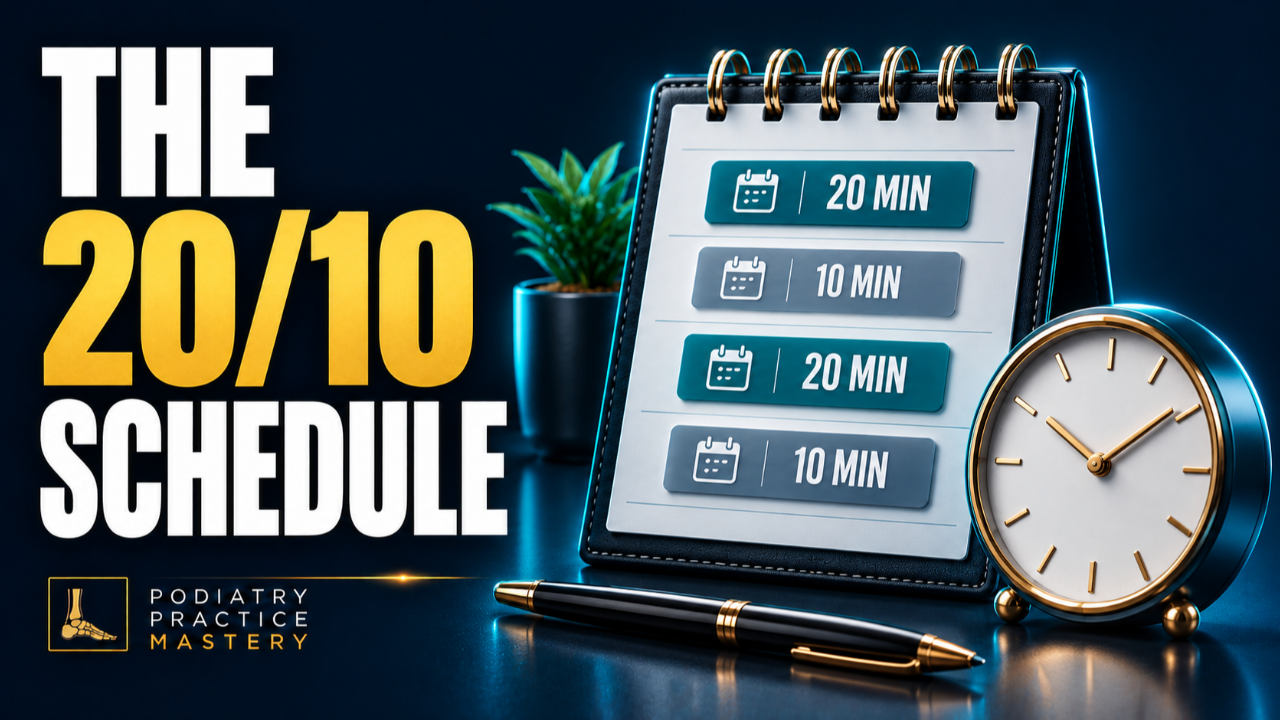
Now we use a combination of 20-minute core visits and two 10-minute quick slots per hour. The goal is to match appointment length to the care being provided.
The 20-Minute Core Visit
New patients and complex established patients receive 20-minute appointments. That gives us time to listen, educate them about their condition, offer appropriate procedures, and build trust.
I don't want to rush through important conversations with patients who need more time. Those minutes let me understand their concerns, explain treatment options, and make appropriate recommendations.
In our practice, that has meant higher-quality care, better treatment acceptance, and less rushing.
The 10-Minute Strategic Slots
Twice per hour, we build in 10-minute appointments for predictable visits that generally require less time and decision-making than a new or complex patient.
Examples include:
- Matrixectomy follow-ups
- Paronychia checks
- Fracture follow-ups
- Quick wart treatments
These are the types of visits we consider for quick slots. The patient's actual needs still determine the time required.
The important thing is that these appointments are intentional. Not every patient needs a 20-minute appointment, and not every patient should be scheduled for only 10 minutes.
Build quick slots deliberately. Don't let them take over the schedule.
Consolidating Nail Care
We made another important scheduling decision: each doctor performs nail care during one half-day per week.
That change helped us reduce mental fatigue, increase procedure volume, and improve our energy throughout the week.
Rather than constantly switching between different types of visits, we have a more structured schedule. It makes the day more predictable.
Structure protects you from randomness.
Why Scheduling Matters for Practice Growth
Scheduling is about more than filling appointment slots. It is about organizing your time so you can give patients the care and attention they need.
You want enough time for complex evaluations, education, and treatment discussions. You also don't want straightforward follow-ups unnecessarily occupying longer appointments.
The 20/10 model helps us balance those needs. Consolidating nail care into dedicated sessions helps us organize the rest of our clinical work.
This is the approach that has worked for our practice. The useful starting point is to look at your own visit types and where your current time blocks do or don't fit.
Four Takeaways for Your Schedule
- Match the time block to the visit. Different appointments require different amounts of time.
- Protect time and cognitive energy for complex cases. Allow room for evaluation, education, and treatment planning.
- Build quick slots intentionally. Use shorter appointments for appropriate, predictable visits.
- Treat scheduling as a practice-management tool. How you organize the day affects efficiency and the time you can dedicate to patient care.
You don't necessarily need to work more hours or rush through additional patients to improve your practice. Sometimes, you need a better schedule.
For us, that meant 20-minute core visits, strategically placed 10-minute appointments, and a dedicated nail-care half-day.
Find Your Practice's Next Step
Want a clearer picture of where to focus? Start with the free Practice Scorecard to compare patient volume and collections per visit, then decide which area deserves attention first.