
Selling the Vacation: How Small Conversations Drive Big Acceptance
READ TIME – 2 MINUTES
Welcome to Podiatry Practice Mastery.
I want to walk you through two half-days near the end of the year and, more importantly, the patterns that showed up. These weren’t just busy clinic days—they were reminders of how rapport, framing, and expectation-setting directly impact treatment acceptance.
MVP #1: Rapport Before Recommendations
One of the most valuable patients was a 58-year-old man with bilateral heel pain and equinus. Clinically straightforward—but what stood out was the connection. He was from the Azores, spoke Portuguese (not Brazilian), and loved codfish. We spent a few minutes talking about food and culture before ever talking about treatment.
That rapport mattered.
He moved forward with:
- Bilateral night splints (Pelto Special)
- OTC Northwest-style inserts (carbon fiber, modifiable)
- And was prepped for future shockwave
Here’s the key: I introduced Phase 1 vs Phase 2 care on visit one.
- Phase 1 = insurance-covered basics
- Phase 2 = often necessary, but typically cash-based
I didn’t sell shockwave—I set expectations. That simple framework reduces friction later.
MVP #2: Past Experience Sets the Bar
Another MVP was a 31-year-old PA with bilateral Achilles tendinitis. I’d treated her years ago with shockwave for peroneal tendinitis—three sessions, great result.
So guess what she expected? Three sessions.
Even though I now frame shockwave as 3–6 sessions, I honored her precedent. Same pricing too. Patients anchor to prior experiences—whether it’s number of visits, cost, or outcomes. That’s something we need to stay aware of in our own practices.
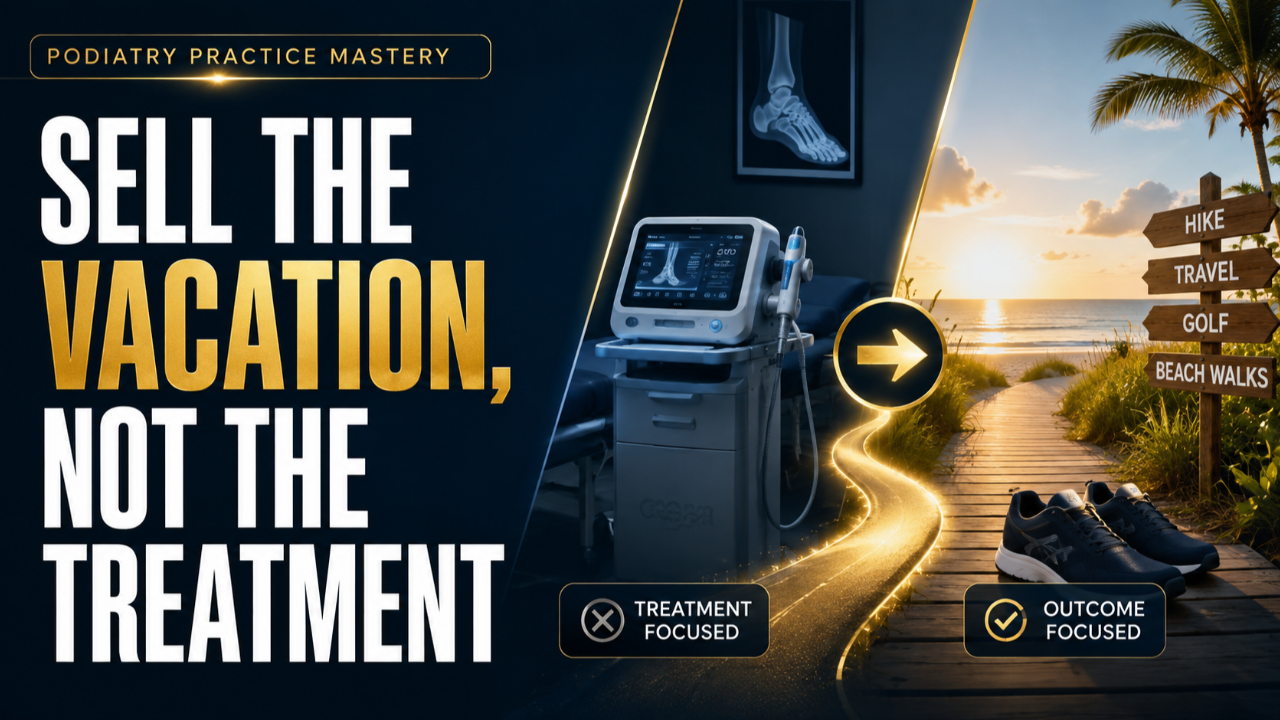
The Big Lesson: “Sell the Vacation”
This showed up again later with patients considering fat pad augmentation (Lipogems-style conversations).
Instead of apologizing for cost, I focused on outcomes:
- The hiker who wants to get back on trails
- The older patient who just wants to walk without pain or wear normal shoes
I asked one extra question:
“If we were sitting here three months from now and this pain was gone—what would that allow you to do again?”
That question changes everything.
Patients don’t want orthotics, shockwave, injections, or procedures. They want the vacation—the pain-free life on the other side.
When you sell the vacation instead of the flight, the hotel, and the delays, acceptance goes up.
Key Takeaways
- Rapport accelerates trust—and trust accelerates acceptance
- Phase 1 vs Phase 2 framing reduces resistance to cash services
- Patients anchor expectations to past care—be intentional
- One future-focused question can dramatically change buy-in