
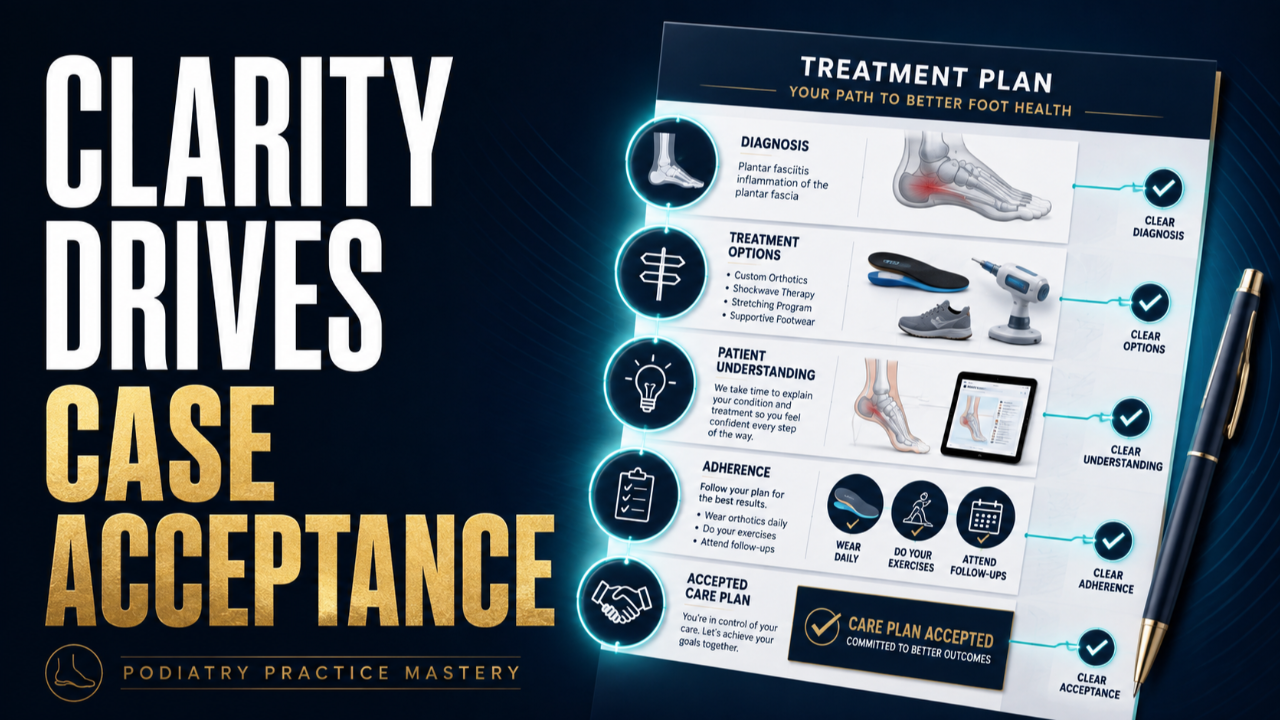
How I Use Treatment Sheets to Increase Clarity, Compliance, and Case Acceptance
READ TIME – 2 MINUTES
Hey everyone, Don here.
This is a deep dive into a great question from my friend Larry:
“Don, how do you actually use treatment sheets in real life?”
Let me walk you through it step by step.
First—What Are Treatment Sheets?
If you’ve never seen them, my treatment sheets live inside the free $1M Practice Formula. If you want to see specific ones, just email me and I’ll send them over.
They’re one-page plans that:
- Simplify patient education
- Reduce overwhelm
- Guide staff and patients clearly
Where I Use Them
My most common ones:
- Plantar fasciitis
- Achilles tendinitis
- Forefoot pain (neuroma, plantar plate, metatarsalgia)
- Nail fungus
I don’t use all 20 every day—just the top 5–6 diagnoses.
Paper vs Digital (Both)
- One office keeps printed copies in a folder
- The other prints as needed from Google Drive
Every treatment room is logged into my Google account, so I can print from any room in either office instantly.
When I Introduce the Sheet
Important: I don’t start with the treatment sheet.
I first:
- Take the history
- Review X-rays or gait analysis
- Explain the diagnosis using models or images
Only after that do I pull out the treatment sheet.
Nail Fungus Example (Second Visit)
I use the treatment sheet on visit #2, not the first.
I walk patients through:
- Oral antifungal vs laser
- Labs (clearly circled)
- Supplements (TheraNail / biotin)
- Shoe hygiene (UV light, spray, socks)
I check boxes as I go so they see the plan forming.
I also intentionally mention laser pricing—even if we’re not doing it—to anchor value.
Musculoskeletal Pain (Plantar Fasciitis, Achilles)
These sheets:
- Show what most patients already tried
- Introduce advanced options without pushing them
- Clearly cross out things they don’t need (surgery, injections, PT)
Patients love knowing:
- What they’re doing
- What they’re not doing
- What’s next if this doesn’t work
Why This Works
- Less confusion
- Better compliance
- Higher trust
- Easier handoff to staff
I used to rely on slide presentations—patients got overwhelmed. One page works better.
Key Takeaways
- Use treatment sheets after explaining the diagnosis
- Keep them simple and visual
- Check off what patients need—and cross out what they don’t
- Use them daily for your most common diagnoses
- One clear plan beats five verbal explanations